


 Dec 24, 2025
 3 min read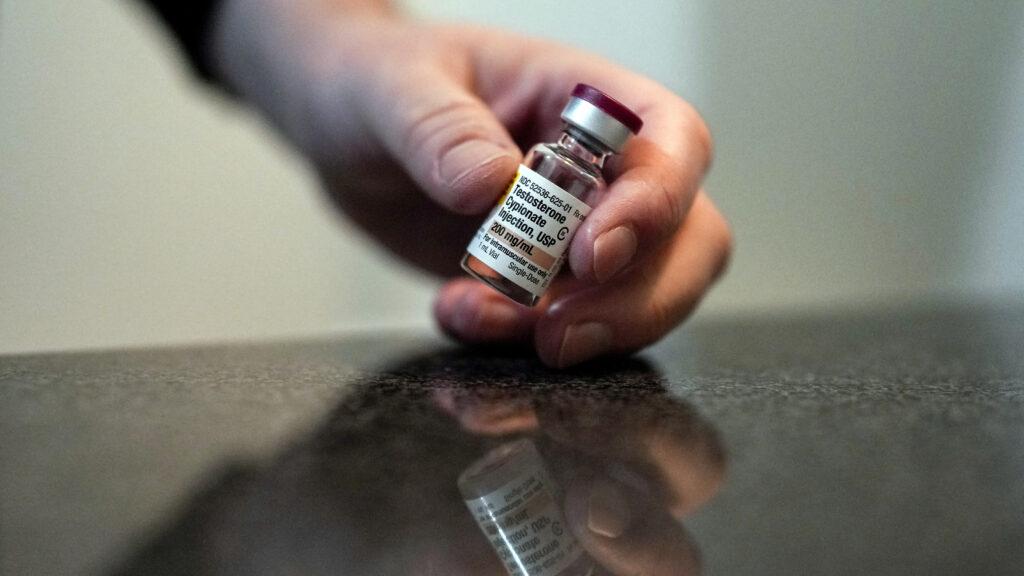
For years, doctors believed that testosterone caused prostate cancer.One urologist has challenged this belief and changed the way men's health is treated.
The first thing Abraham Morgentaler learned about testosterone is that it is a brain hormone.When he graduated in the 1970s he was in the Harvard laboratory where he learned this knowledge: a castrated male lizard caged with a woman will not celebrate his marriage and will not love women;but the same lizard, which is injected with testosterone into testosterone-sensitive areas of the brain, will lie back, swinging its head.
That's what he was thinking when, nearly a decade later, as a fledgling urologist, he began giving men testosterone.The patients are miserable, they complain that the lack of sex is serious and has ruined their relationships and lives.They often come to the second, third, fourth opinion, after other specialists cannot help.
Could we be like lizards?Can testosterone help them?But there was a problem."I was taught in my training that if you inject a healthy man with testosterone today, he will come back with prostate cancer in a month," he said.
At the time, testosterone treatment was limited to a few rare cases of severe hypogonadism, and no one—or anyone who didn't know Morgenthaler—would even consider giving it to men who had already matured with the hormones.But his patients were so desperate that, even though he talked about the risk of prostate cancer and requested a biopsy to make sure they didn't have cancer (the invasive, painful procedure is a challenge when injecting prostate antibiotics), they were willing to take the risk.
So it is.
He began measuring his patients' testosterone levels;During his training he began measuring things he had never done before and through trial and error came up with quantities and protocols that worked for them.He observed their progress and noted the benefits they presented.Often involves improved mood or improved endurance."I have to tell you, it's scary," says Morgentaler, now the Blavatnik Division of Health and Longevity at Harvard Medical School.
"The benefits were clear to me. I felt like I had this magic sauce that no one else had. It wasn't right. I was too young, I wasn't good enough," he said."I was worried that I was dealing with the devil now that people would benefit, but maybe I'd put them at risk and then they'd get prostate cancer."
Except his patients didn't get sick.Not after a month or many months."The first indication I had that there was something wrong with the story was that my boys were doing well. I was monitoring them like crazy," he said, adding that urologists "see themselves as the protectors of the prostate," so putting this particular organ at risk was especially stressful for him.
It took four decades, but the medical consensus is now matched by clinical evidence: testosterone therapy in men with hypogonadism does not increase the risk of prostate cancer.
In a recent conversation with STAT, Morgentaler discussed what led to the avoidance of testosterone therapy for decades and why the hormone remains "medically politicized" despite multiple studies confirming its safety and benefits for men with low testosterone.
This interview has been edited and condensed for clarity.
When you started practicing in the late 1980s, testosterone therapy had been almost non-existent in the US for decades - why is that?
Because of the universal belief that testosterone causes prostate cancer.The teaching is that eunuchs - men who have lost their testicles - do not have prostate cancer.Now I can tell you that there is no basis for this, but this is what all men believe and teach.
What brought me to national awareness about testosterone was that I immediately found prostate cancer in these men who should never have developed prostate cancer because of their low testosterone.It was thought that if you had low testosterone, you would be protected for life, but we found that it is not just some types of cancer, but many others.
But was there a time when testosterone was widely used?
The 1930s and 1940s were the golden age of testosterone use, following the discovery and formulation of testosterone in 1935 by a group of Nobel Prize winners.
In 1940, in an article in the New England Journal of Medicine, Dr. Joseph Aube described it as one of the most powerful drugs in a doctor's arsenal.It describes many things we recognize today: people used testosterone for angina, with great results;They used it for vascular lesions that would not heal - excellent results.
In 1941, that golden period ended.
A man named Charles Huggins published an article with his co-author Clarence Hodges.
He wrote that in men with prostate cancer, when they had their ovaries removed or were given estrogen to lower testosterone, acid phosphatase [an enzyme that is sometimes elevated in prostate cancer patients] decreased, and every time he gave testosterone, acid phosphatase increased.He concluded that testosterone activates prostate cancer.
But eventually you discovered that this is not the case.
I heard about him on the first day of urology training.Higgins, he won the Nobel Prize, he was the most important person in urology, he was like a god in urology.
I didn't have access to anyone's library of articles until 1941, so I had to go to the Harvard Medical Library: I go down to the basement and there are the archives, they have the journals.I found a dusty thing - I blow the dust off this thick volume - and I read the article.I was very upset because Huggins says in black and white: "Every patient I gave testosterone to had his acid phosphatase rise."
The last sentence of the article says that testosterone injections activate prostate cancer.
And I think, "I've got hundreds of testosterone patients now, my boys are going to get cancer, that's what Huggins says."
But I forced myself to read the story again if I had to explain it, and I asked the important question: How many patients did it cure?How many patients did he castrate?
It turned out that he only gave testosterone injections to three men.Of those three, he reported only secondary outcomes for them.One of the men had already been circumcised.In fact, only one previously untreated man had received testosterone, and the blood test results were all over the place.Interpretation is not possible.
The entire case was based on one patient undergoing treatment for 18 days.This was the basis for the reluctance of doctors to treat men with testosterone for the next 60 years.
That's amazing.
Your review published in 2004, showing the lack of convincing scientific evidence that testosterone therapy leads to prostate cancer, ushered in a new era for testosterone.Since then, additional research has confirmed its safety profile, but there is still ambivalence about testosterone therapy.Why?
Even the best scientists are very susceptible to stories.
Testosterone is medically politicized and you have these extreme camps.You call them "structural" medical scientists.They have opinions about testosterone that are not based on clinical experience.They have a preconceived notion that it's of limited value, that there are very few real candidates, and that they don't treat patients, so they don't get any feedback from them.Then you have people who think this is the answer to everything.leaves plenty of room.
This is what the field has to fight: a primary assumption that people already know what testosterone is, and that it has a really bad reputation.And it's not just the medical community, the thing is, everyone in the world has heard the word testosterone and everyone has an opinion about it, what people think of as male energy or masculinity.
It's not long since testosterone has been reinvented in medicine.
That it is such a recent phenomenon, if you will, is demonstrated in a number of ways.First, it is not taught in medical school as a rule.Unless the medical school curriculum includes only a urologist who practices sexual medicine, it is not taught at all.
If you are a medical educator, there is a good chance that your training took place before so much testosterone and testosterone research was introduced.For many of us, by the time we leave medical school and residency, our opinions are often formed and set, and our beliefs about certain things are well established.
Only one generation has deleted us, so I think it will take time.
This shows similarities to what happened with the Women’s Health Initiative: it took two decades to remove the “black label” warning on estrogen therapy for menopause.
I once wrote a paper with some colleagues about homophobia, and I think the general thing is about sex.It's not that they're hormones, like no one realizes about thyroid hormones.It is sex hormones.It's about a certain level of repression and discomfort around sexuality.
She often talks about how testosterone highlights some weaknesses in medicine as a broader field as well.
One of the things that gets lost in the testosterone debate is how it affects a person and how they experience life.
[When I started the testosterone prescription], I didn't know what was going to happen because it wasn't taught, it wasn't in the textbooks.So I asked my patients what they felt, and the answers were amazing, and I didn't know what to do.
My hope was that sexual characteristics would improve and for many of these guys, they did.It was great, but they said other things besides sex, I can't imagine.I hear things like: "I wake up in the morning feeling optimistic. I haven't felt this way in years";"My wife likes me again ... she thinks I'm kind to her."I forgot how I felt". One man said: "Now that I'm on testosterone, what I see is, before I saw the world in black and white, now I see it in color."
Testosterone is a brain hormone and has many functions.One of the things that research has shown, and what our patients tell us all the time, is that their mood has improved.But it is difficult in medicine to introduce tools that need to capture a lot of people's knowledge.And one of the problems that I call the evidence-based era is two things that are almost completely dismissed: One is clinical knowledge, and the other is patient symptoms and knowledge.I was taught not to listen to what patients say because they are unreliable.
I think medicine has lost its humanity.
STAT coverage of men's and children's health issues is funded and managed by the National Philanthropic Trust and supported by Rise Together, a donor-advised foundation founded by Richard Reeves, founding president of the American Institute for Boys and Men;and by the Boston Foundation.Our journalistic decisions are not influenced by our financial supporters.